
I had a catch-up call with Rob Ward, Lead Lengthsman at Garstang Town Council, in October. He had offered to show me how he actually uses Civic.ly day to day, to help us with some design work. Partway through, he said something I have been thinking about ever since.
"Because we've got Civic.ly, that person essentially doesn't exist."
The person he means is the administrator most councils would need to run a grounds team like his. Here is how Garstang manages without one.
A small team with a big patch
Garstang is a market town in rural Lancashire. Rob leads its grounds team, which, when I asked how big it was, he summed up in three words: "One and a half." That team does not just look after Garstang. It now runs grounds and highways work for five neighbouring parishes as well, with more interested for next year.
A lot of that work is the kind nobody sees until it goes wrong.
"If it's really unglamorous, it's gully clearing."
Drainage is the single biggest category on Garstang's register: 83 assets as at 18 October 2026, out of more than 400 across the town and the parishes. Add verges, benches, litter rounds, play areas and Christmas lights, and you have six councils' worth of jobs for a team of one and a half.
Before: a notebook that went everywhere
When the partner parishes started coming on board, the plan lived where it lives for most lengthsmen: in Rob's head and in his pocket.
"We wouldn't have got through the year without it. Basically, trying to keep all that straight in, I don't know, spreadsheets or my little journal that goes everywhere with me."
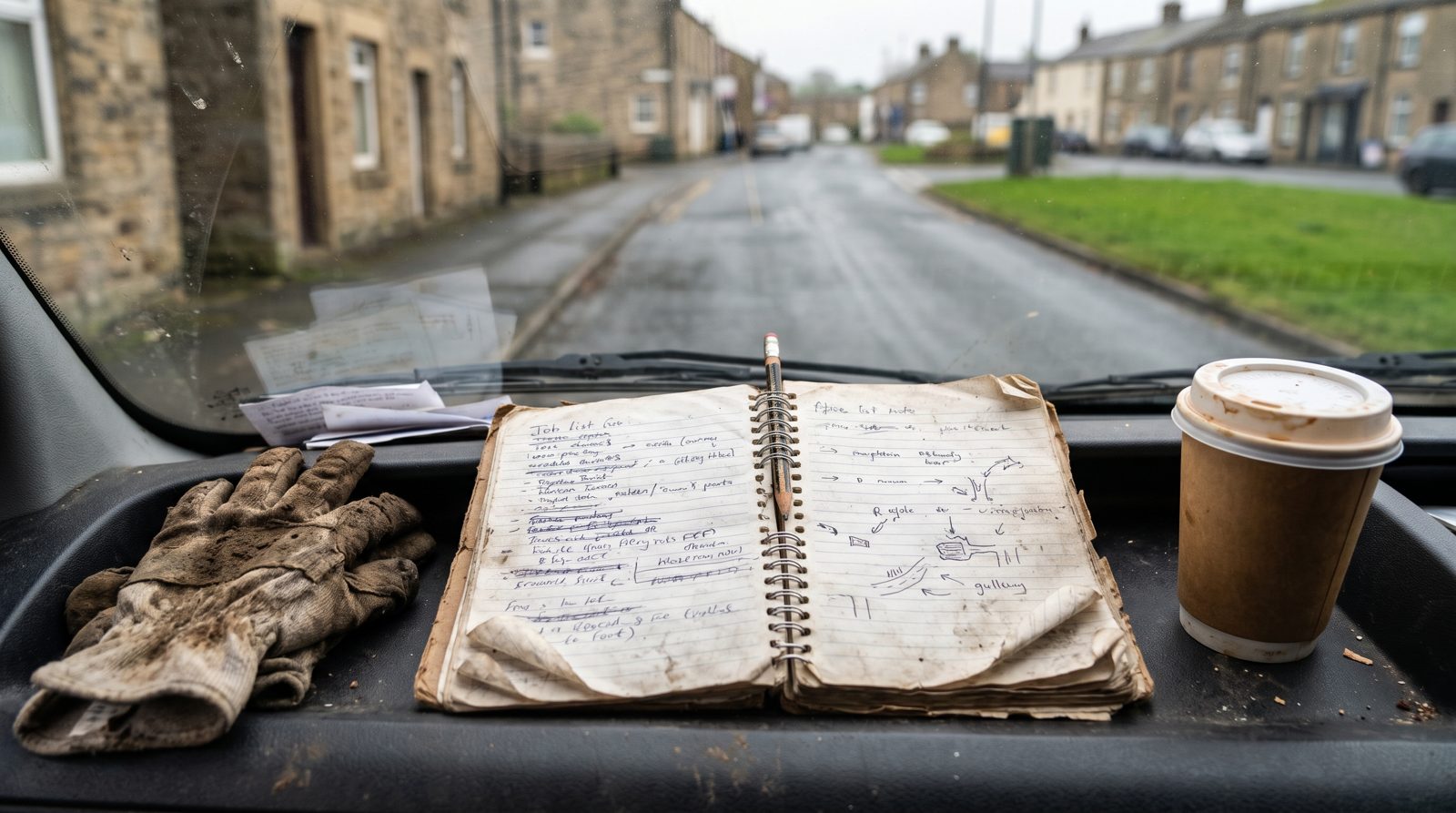
The council's asset register sat in its finance system, which is fine for the accounts but tells you nothing about which gully was cleared last month. Inspections were on paper. As Rob put it, "I did enough admin last winter to scrape us through this year."
The morning: the weather writes the plan
Here is the bit I think every grounds team will recognise.
"So if I turn up in the morning and I've got my list of jobs on my phone, but it's hammering down with rain. Like, we're not relying on management to go, well, go and do this instead, because we've only got our run plan for the day. We evolve the run plan in response to what's out there."
Rob does not treat the dates in Civic.ly as fixed appointments. "We operate to the week, so things are placeholders, really, more than anything." The routines put the week's gully checks, inspections and litter rounds on his phone. He decides the order. If the rain makes verge cutting pointless, he does the drains instead, and the plan updates as he goes.
In the field: log it where it happens
The old way of recording work was to write it down, take it back to the office and have someone type it up. Rob's view of that is blunt.
"You're out there anyway, so what's the point in writing it down, bringing it back to office staff to have it put on a system to come back?"
So the work gets logged on the mobile app, on the spot. When something is broken, he raises a defect there and then, with a photo. Garstang had raised 42 defects by 11 October and resolved 40 of them.
The notebook has not completely gone, and I like that he is honest about it. Some of the parishes are rural enough that there is no signal at all. Then it gets jotted down and goes "straight in the system" when he is back. But, in his words, "for logging actual work out in the field, the app is primarily where we're at most of the time."
The back office that isn't there
This is the part of our conversation that stuck with me.
"If you think I'm frontline staff, but I'm also managing at the same time. And traditionally, I think you'd have probably employed someone two, three days a week to deal with inquiries, assign work, check tools and all that sort of thing. Because we've got Civic.ly, that person essentially doesn't exist. We've put a few hours on with the clerk who helps manage things, and then it's me, but I can manage it in real time."
For a small council, or a group of small councils sharing a team, that is the difference between the arrangement working and not working. Every hour that goes on admin is an hour not spent on the parishes. Rob is clear about where the value lands: "It's essential... it would have cost everyone more money for administrative work."
The councillors: they know what is going on
Running work for six councils means six sets of councillors who want to know what they are getting. Each month, Rob sends them a report of the work done and the work coming up.
"And then we give them the scheduled works as well. And it's really good because they feel like they know what's going on."
And because the plan is live, councillors can steer it: "they'll go, oh, well, you're doing this, but could you do this instead? And then we say, well, yeah, and we go in and we affect the change in the system."
A year in numbers
By 11 October 2026, Garstang had:
- 413 assets on the register across the town and five neighbouring parishes.
- 1,213 jobs and inspections completed, 93% of everything scheduled.
- 440 inspections and 726 jobs recorded, on 233 separate days.
- More than 1,000 tasks already planned ahead.
Work built through the spring and peaked over the summer, which is exactly when a grounds team is busiest. The day after we spoke, Rob added 19 public footpaths for two of the parishes. That is the pattern: when a new piece of work comes in, it goes into the system.
"It's amazing how right you've got it with your first swing, to be honest with you."
How to do the same for your patch
Whether you are one council or a lengthsman working for several, this is the order that has worked for Garstang:
- Put every council in one account, and tag each asset with its parish. Garstang uses a short parish code on each asset, so the work for each council can be filtered and reported separately.
- Start with the unglamorous rounds. Gully checks, litter rounds and verges are regular and repetitive, which makes them perfect for routines. Our guide to creating a routine walks you through it.
- Plan to the week, not the day. Let the routines fill the week and let the person in the van choose the order. The weather will decide anyway.
- Log it on the phone, where the work happens. Our guide to working in the field with the mobile app is the one to send your team. When something is broken, raise a defect with a photo there and then.
- Send your councillors the plan as well as the results. A monthly report of work done and work scheduled keeps them informed and gives them a simple way to ask for changes. Filtering and reporting your data shows you how.
Thank you to Rob and everyone at Garstang Town Council for letting us share their story.
The image at the top of this page is an illustration of Rob, created with AI from a photo of him.